In September 2026, a customer procurement and technical team of 5 people from South Africa arrived at Dianshan Lake in Kunshan, Jiangsu to conduct on-site inspection and factory testing of Suzhou Paide Special Cable Technology Co., Ltd. (hereinafter referred to as "Paide Cable"). There was no sightseeing itinerary arranged for this visit, and the client left their time in the workshop and conference room.

The customer first walked into the Paide cable production workshop and visited the processes of conductor twisting, insulation extrusion, cabling, braided shielding, sheath extrusion, and finished product packaging in sequence. Multiple automated production lines are operating according to production plans, including tethered drone cables urgently produced for overseas projects, as well as watertight cables and drag chain cables currently in stock.
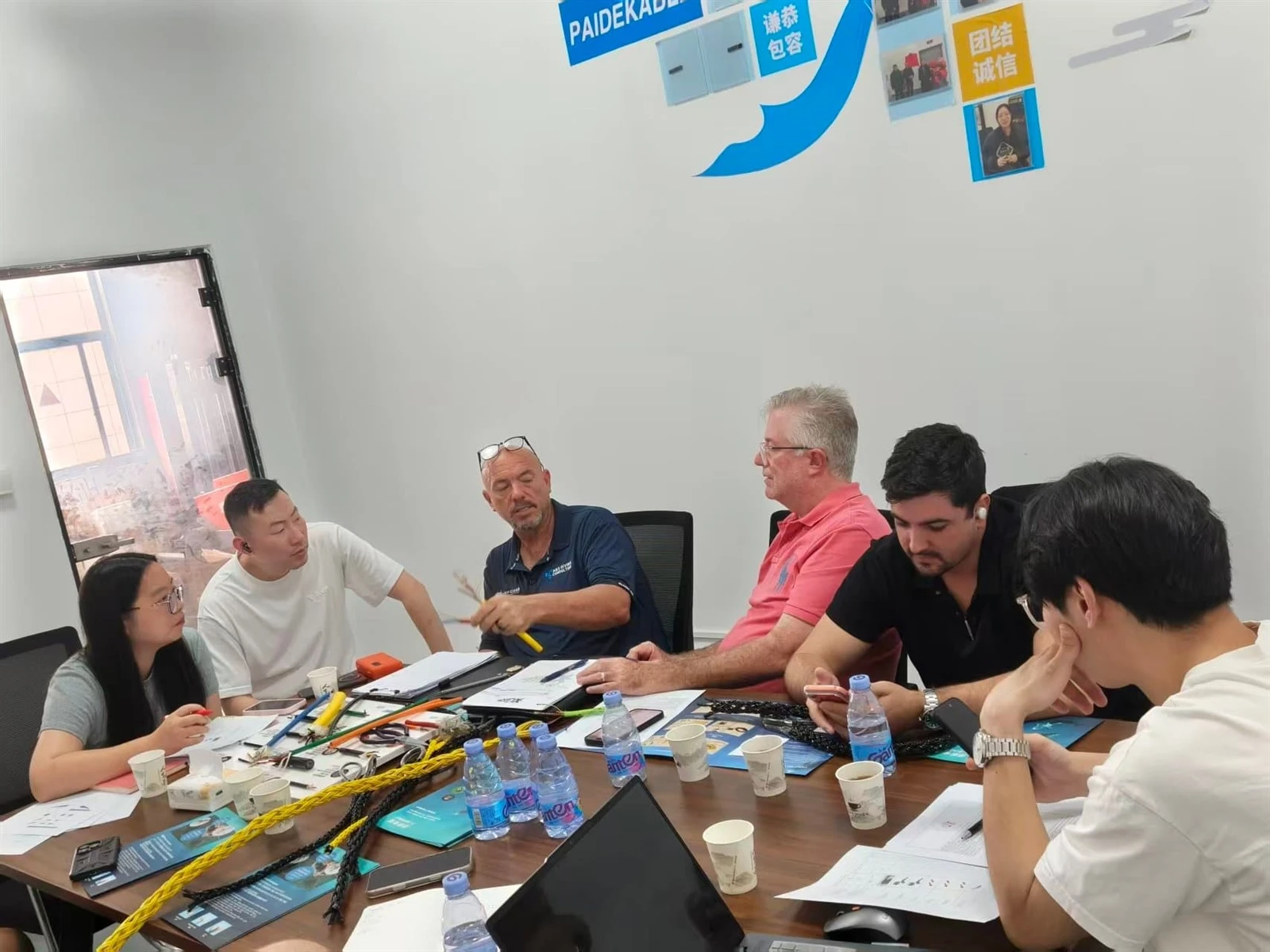
At the demand docking meeting, both parties confirmed the technical boundaries item by item based on actual working conditions: conductor cross-section, outer diameter and weight per unit length (buoyancy control), minimum bending radius, temperature resistance level, tensile strength and weight in water, as well as joint and terminal treatment methods. The Paide Cable Technology Team has proposed multiple optional solutions based on existing conventional models and invention and utility model patents, and broken down the delivery time into three stages: "sampling - small batch - batch delivery". Customized samples can be delivered in as fast as 7 days.
Customers are willing to fly for more than ten hours to visit the factory, which shows that they want more than just a quotation, "said the person in charge of Paide Cable." The cost of errors in special cables is very high. Once they fail underwater or at high altitude, the losses far exceed the price of the cable itself. Therefore, we prefer to leave the problem to be solved in the sampling stage